Pack One Carry-On for City Days and Day Hikes
A two-state packing test: airline transit load versus walking load, with gate-check and wet-clothes questions.
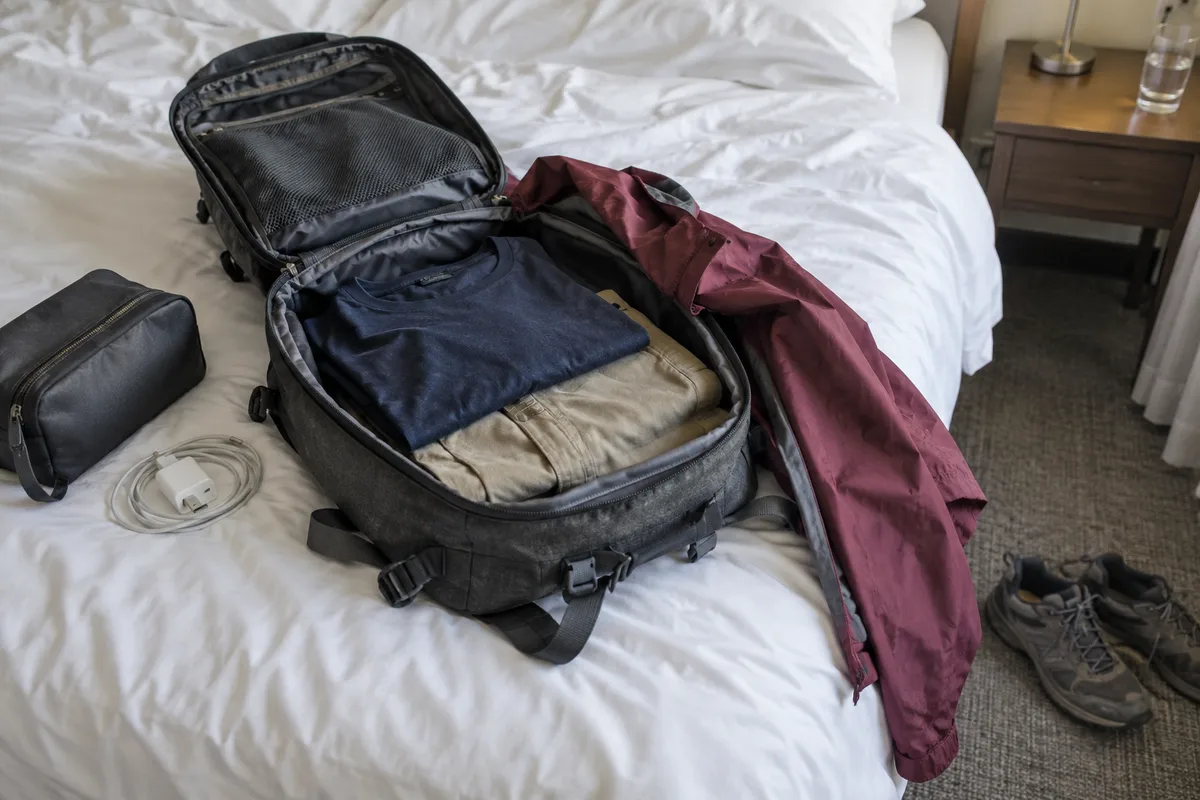
Pack one carry-on for the travel you will actually do, then test it in two states: moving between places and walking for the day. The same bag may serve both roles, but the contents you leave at your room are different from the equipment you need outdoors.
Start by checking the booked flights and the planned walks. One-bag travel is a preference, not a reason to remove equipment required by the route or ignore an airline's rules. If the complete necessary load does not work, change the baggage arrangement or the outing.
Check the journey's baggage conditions first
Read the allowance attached to each applicable flight and fare. Check dimensions, permitted weight, item count and any separate rules affecting the equipment you intend to carry. Do not use the word “carry-on” as a universal bag size.
British Airways' baggage guidance provides a carrier-specific allowance calculator and separate information for travel involving other airlines. That is an example of the checks to make, not a size recommendation for every flight.
Save the relevant booking information while you can access it. A bag that worked on a previous trip is not evidence that the next booking has the same conditions. Check airport screening and operating-carrier requirements for any restricted equipment separately.
Build the walking load before trimming clothes
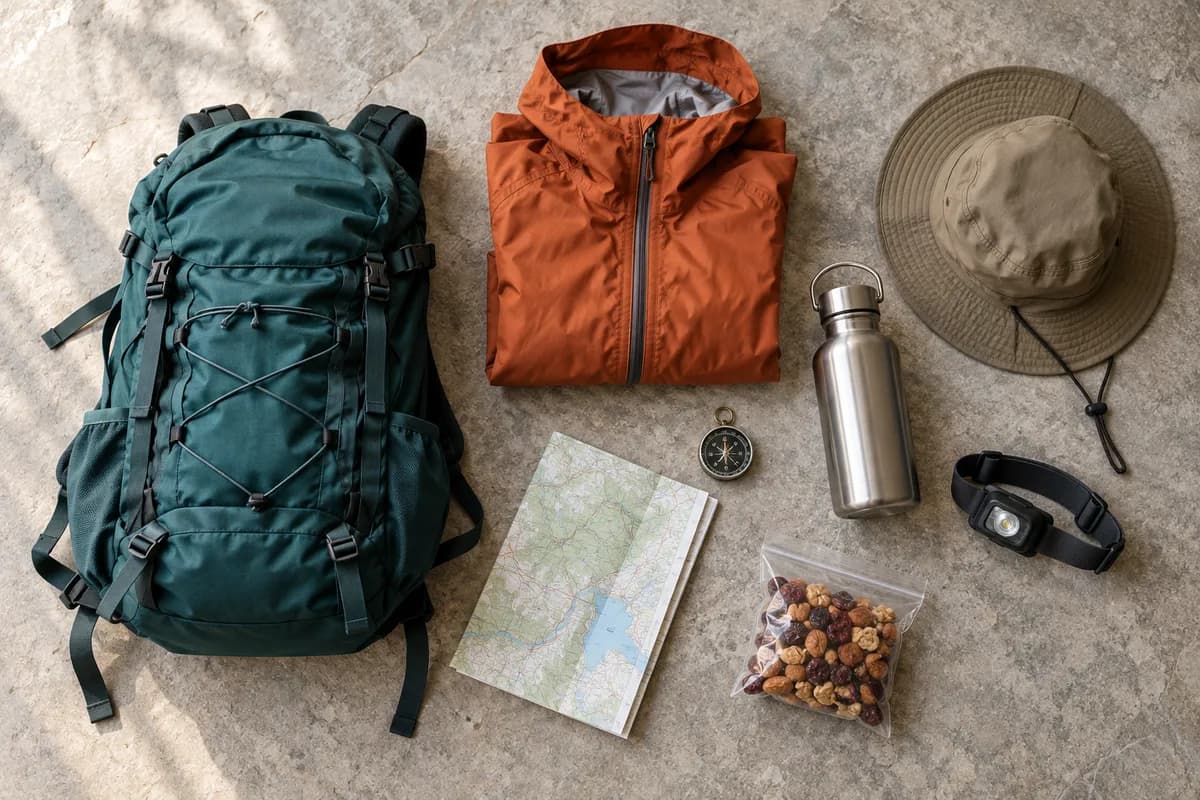
Identify the actual walks, conditions and arrangements. Use the day-hike packing checklist to consider the required systems, then choose the items appropriate to this trip.
Keep this separate from the city clothing decision. A spare shirt can sometimes be omitted; a route requirement cannot be dismissed simply because the bag is full. If something important is excluded, the one-bag plan has not passed the test.
Do not assume a stay in a hotel makes a walking day equivalent to a city stroll. The room changes where the main luggage sleeps, not what happens between leaving and returning.
Your travel load is not your walking load
- Travel load
- Leave agreed items at room
- Walking load
- Return load
- Repack everything
The diagram has two distinct loads. During travel they share one bag; during the outing, part of that load needs an agreed place at the accommodation.
Assign clothing clear jobs
Lay out the clothing by use: travel, city outings, the planned walk and the time after returning. Look for items that genuinely work in more than one situation. Do not count an item twice in the physical load because it appears in two categories.
Consider an invented trip with city visits and room-based day hikes. The traveler wants one set of walking clothing available while another used item can be kept apart. Whether laundry helps depends on actual access, instructions and drying time; the plan cannot assume everything becomes clean and dry overnight.
The clothing count follows those arrangements. It does not need a universal packing formula or a claim that everyone can travel with the same number of garments.
For footwear, use the day-hike footwear guide to check the demands of the route. A pair that looks suitable for both city and trail still needs to work for the actual surface, conditions and wearer.
Solve the walking-day bag state
You have several possible arrangements: empty part of the main bag at the room and use it for the outing, carry a suitable separate day bag within the travel load, or revise the overall luggage plan. None is automatically best.
| Test | Question to answer |
|---|---|
| At the room | Where do the items not carried on the walk remain? |
| On the walk | Does the actual walking load fit and stay accessible? |
| After returning | Where do damp or used items go? |
| Before the next transfer | Can everything be packed again without leaving something out? |
The daypack-versus-backpack comparison explains the difference between day equipment and overnight equipment. Here, the extra task is making the entire holiday load coexist with the airline arrangement.
A bag that closes only when the walking equipment is still on the floor is not a successful one-bag test.
Make a gate-check plan for electronics
Think about what must stay with you if the larger carry-on is taken for hold carriage. Keep the relevant items easy to remove rather than buried beneath clothing.
The FAA's US guidance on lithium batteries says that spare lithium batteries and power banks must be removed from a carry-on checked at the gate or planeside and kept in the cabin. Check the applicable airline's current battery and device rules as well. This paragraph is not a complete worldwide dangerous-goods checklist.
Do not treat a small battery or familiar device as automatically exempt from restrictions. Read the rule for the actual item, and keep essential travel documents and personal necessities accessible under your own requirements.
Test the load you will bring home
Pack everything, including the items normally left loose while you are planning. Then set up the walking-day state and put the travel load back together again.
Repeat the test with a space for used clothing and whatever you already know you will bring back. You do not need to buy more things to complete the exercise. You need an honest picture of the bag after it has been used.
Try carrying the packed bag in an ordinary local setting to check access and handling. This is a practical rehearsal, not proof that the bag or traveler is suited to a particular hike.
Record the unresolved baggage and accommodation questions in your trip worksheet. The useful result is a load that works in both states, with a clear reason for every item and somewhere for it to be.
What this guide is based on
This guide is researched editorial guidance. A source review does not confirm current local access, road conditions or your individual ability.
- Your baggage essentials ↗British Airways · B30-05
Carrier-specific guidance and calculator; no universal carry-on dimensions, fare entitlement or partner-airline allowance.
- Lithium Batteries in Baggage ↗Federal Aviation Administration · B30-06
US aviation guidance on batteries, including gate checking; not every airline restriction or a worldwide screening rule.