Daypack vs Backpack for a Hiking Holiday
Match the bag you carry to overnight arrangements, luggage support and the real equipment load.
Choose a daypack when your carried equipment is for the walking day; choose a larger pack when you must carry overnight equipment too. Bag names and advertised capacities do not determine the answer. Your sleeping arrangement and luggage transfer do.
A holiday can require a suitcase for travel and a separate daypack for hiking. A walking journey may require one carried pack, or a daypack plus a supported main bag. Confirm the arrangement before shopping.
Trace each bag from morning to night
| Holiday arrangement | Main luggage | Carried walking bag | Detail to confirm |
|---|---|---|---|
| Same-room day hikes | Stays with host by agreement | Day gear | Storage and access on return |
| Road trip with day hikes | Travels with the vehicle | Day gear | Security while the car is parked |
| Lodge-to-lodge journey | Carried or separately transferred | Day gear plus whatever is not transferred | Transfer limits, timing and missed-stage plan |
| Self-supported camping journey | Mostly carried | Overnight and day equipment | Full load, camping rules and resupply |
The NPS backcountry guide emphasizes planning and testing equipment. We use that principle here to check the complete load rather than select a bag from a number alone.
Do not buy capacity before defining contents
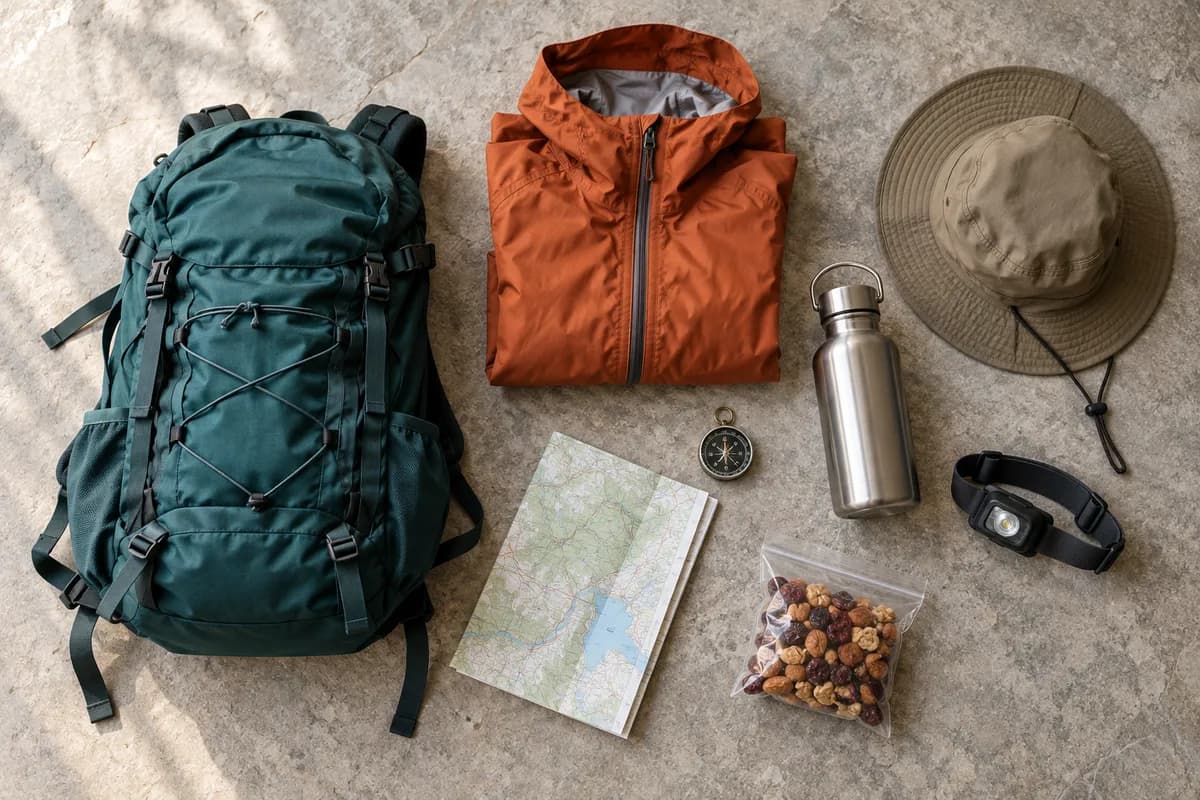
Lay out what must be carried, including water, clothing and the items required by the actual route. Separate optional comfort items from equipment with a clear function. Then check whether the bag carries that load comfortably and keeps it accessible.
We do not prescribe one liter capacity for every day hike. A short sheltered walk and a full mountain day with extra layers can require different space. Your body, pack design and load distribution also vary.
A useful original test is the “missing car” exercise: imagine the vehicle is waiting at the finish. Which items must remain with you between trailheads? Those belong in the carried bag even if the rest of the holiday uses a large suitcase.
A transfer needs more than a promise
Ask who receives the main bag, whether there is a size or weight limit, when it arrives and where it is left. Keep essential personal items with you rather than relying on an uncertain delivery.
If the walking route changes, find out whether the transfer changes with it. A supported label does not explain what happens when a stage is skipped or a pickup is missed.
For a rental car, check luggage space with passengers and bags together. A vehicle's seat count does not establish that the full group and equipment fit comfortably.
Fit the bag to how you move
Load the proposed pack, adjust it and try a local walk. Check pressure, movement, access to water and whether frequently used layers can be reached. If overnight equipment is unfamiliar, establish that it works before relying on it during a journey.
This is an equipment and logistics choice, not a fitness test. The practical outcome is a bag plan with a named location for every item category.
Use hiking vs trekking vs backpacking to clarify the format, then day-hike packing to build the carried list.
What this guide is based on
This guide is researched editorial guidance. A source review does not confirm current local access, road conditions or your individual ability.
- Ten Essentials ↗U.S. National Park Service · S01
General preparation framework; adapt to the route, conditions and local rules. No medical assessment.
- Wilderness & Backcountry Camping ↗U.S. National Park Service · S15
General planning principles; camping rules and permits are location-specific.