What to Pack for a Day Hike
Build and save a practical day-hike checklist, add personal items and print a route-specific list.
Tick packed items, add your own and keep the list on this device.
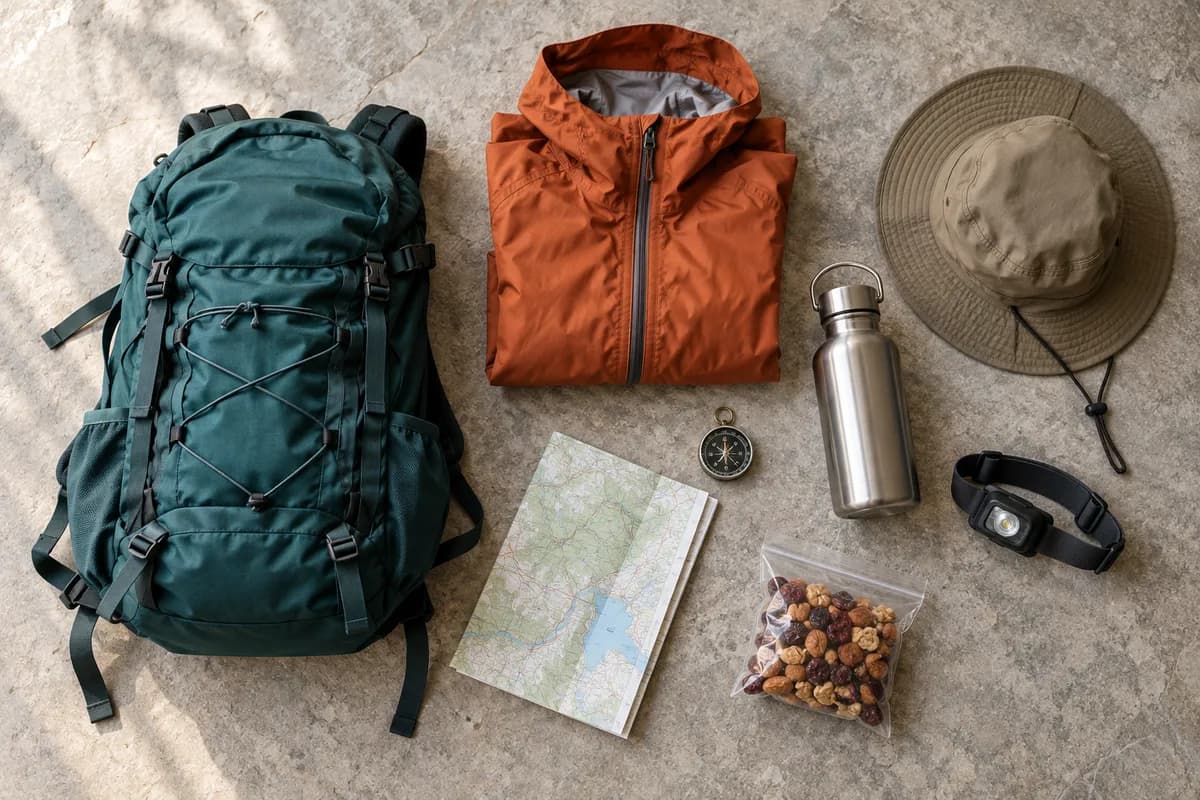
Pack for the complete walking day and a delay, not only for the planned viewpoint. Start with essential systems, then adapt the actual items to the weather, route and local restrictions. A fixed list cannot establish that a trip is suitable or that every item is necessary everywhere.
The checklist on this page is an editable preparation tool. Check an item only after verifying that it is packed and usable. Add your personal items, save on this device and print or export the list for the trip.
Start with systems, then select equipment
The NPS Ten Essentials groups preparation by function. Its purpose is wider than buying ten objects. Our checklist adapts that framework into practical checks.
| System | A useful preparation check |
|---|---|
| Navigation | Route information available offline, backup appropriate to the walk, equipment you can use |
| Sun and weather protection | Clothing and protection matched to the forecast and exposure |
| Extra clothing | Layers that still work if the day becomes colder or wetter |
| Lighting | Working light and its power supply |
| First aid and personal needs | Suitable supplies and your own required items |
| Repair and fire preparation | Route-appropriate equipment, with local fire restrictions checked |
| Food and water | Planned supply, reserves and any verified refill or treatment arrangement |
| Emergency shelter | Suitable protection for an unexpected delay |
Do not infer that “day hike” makes a light, map or weather layer unnecessary. Equally, avoid treating a fire kit as permission to light a fire.
Separate the walk from the car bag
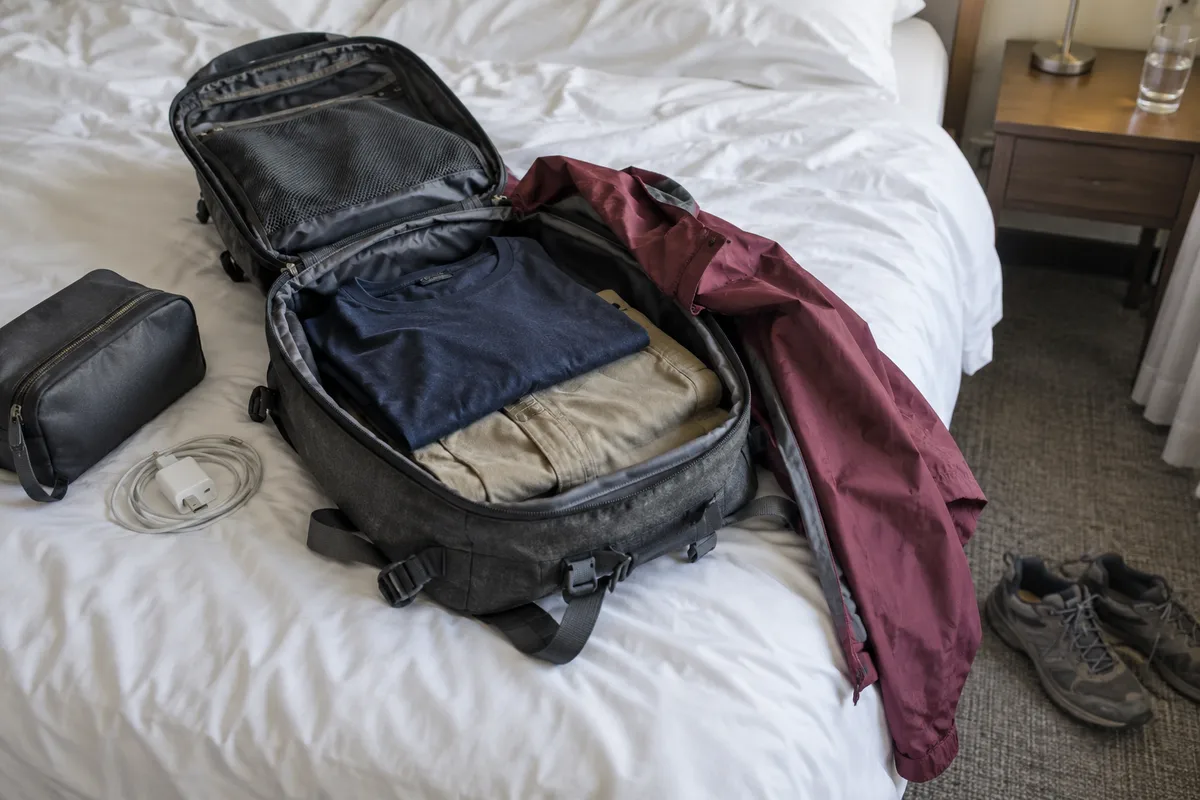
On a road trip, the car may hold clothes, spare footwear and a large suitcase. Those items do not help during the walk if the vehicle is inaccessible. Put the equipment needed on the route in the carried pack.
This matters especially for a point-to-point day. The car may travel to the finish, while you remain on the trail for longer than planned. Confirm who holds the keys and where the main luggage will be.
An original packing exercise: take your prepared pack to the door, then name what would happen if the return transfer were delayed. If the answer relies on equipment still inside the car, reconsider that arrangement.
Check usability, not only possession
Open the offline route and check that it covers the whole area. Turn the light on. Check the clothing fit and how water is carried. Equipment that is unfamiliar, discharged or buried under inaccessible items does not perform its intended function.
Pack the items you may need during the walk where you can reach them. Keep vulnerable supplies protected from rain. Resolve uncertainty about water sources before departure instead of assuming that a stream or shop will be available.
Turn the route brief into packing decisions
For the Arthur's Pass reading example, DOC calls for warm/rain clothing, sun protection, food, drink and strong footwear, and warns that mountain weather changes quickly. These are place-specific preparation pointers, not a complete personal list or permission to walk in unsuitable conditions.
Use the established track return and turnaround questions when checking navigation, lighting and supplies for a delay. A short intended target does not make the return arrangement disappear. The NPS systems above remain a framework to adapt, not a substitute for checking the actual route and notices.
If your whole trip uses one bag, separate airline transit load from the carried hiking load. Rehearse offline route access before relying on the navigation item. A tick in this checklist records your action; it does not verify a trail.
Personalize and preserve the list
Add items for your own needs and the actual day's conditions. Custom entries stay part of the saved checklist rather than replacing the core preparation questions. The save message refers to this browser and origin; it is not cloud synchronization.
After saving, reload the page and confirm the list before relying on it. The print button requests the browser's print dialog. The exported list records the source page, version and review date so it makes sense away from the website.
Use the trip worksheet to keep route and transport questions beside this equipment list.
 A list you can use
Pack for your actual plan
Choose a context, tick what you have packed and add your own items.
Your checklist stays in this browser and address. Save after editing to restore it on reload. Checked means you marked it packed; it is not a safety assessment. Water, layers and shelter depend on the actual route and forecast.
Changing address or device? Download or import saved plans in the worksheet.
Checking for choices saved in this browser…
0 of 14 visible items marked packed. Changing context keeps the other items and their check marks.
Print opens a separate, menu-free document. Save as PDF is available in the browser dialog. Downloads include checked, custom and omitted items, units, dates and questions still to confirm.
Country note: check FCDO Kyrgyzstan travel advice before departure; changes to access and local arrangements can affect your list. Read our Kyrgyzstan planning guide. Exact access and local arrangements remain unknown for your dates.
What this guide is based on
This guide is researched editorial guidance. A source review does not confirm current local access, road conditions or your individual ability.
- Ten Essentials ↗U.S. National Park Service · S01
General preparation framework; adapt to the route, conditions and local rules. No medical assessment.
- Staying Safe: Trails & Hiking ↗U.S. National Park Service · S16
General preparation resources; not a guarantee that a particular hike is suitable.
- Arthur’s Pass Walking Track ↗New Zealand Department of Conservation · C30-15
Actual route-description reading example; not a recommendation or confirmation of current access, duration or suitability.