Do You Need Hiking Boots for Day Hikes?
Choose footwear by terrain, conditions, fit and load, with a practical check before a hiking holiday.
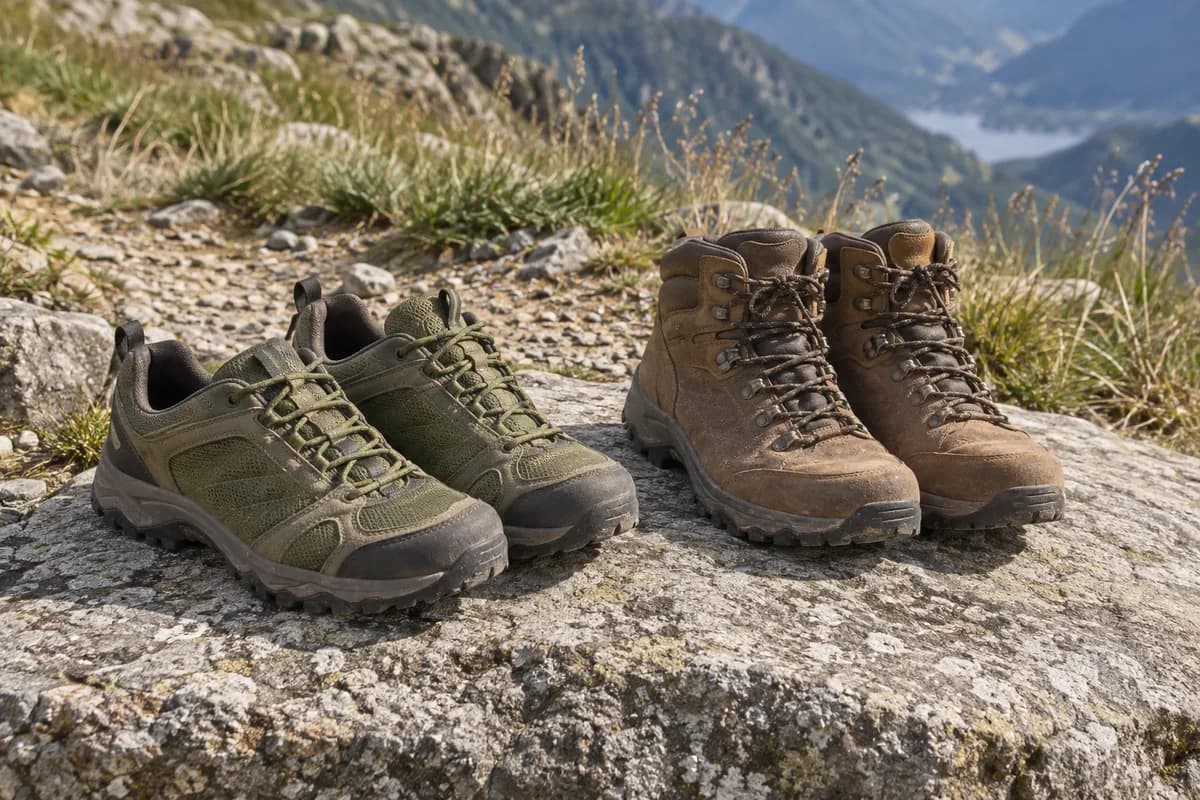
You do not choose footwear from the phrase “day hike” alone. Compare the actual surface, conditions, carried load and fit. Some routes call for boots; others may be appropriate for hiking shoes. Follow specific local advice for the route rather than a universal rule about footwear height.
The Denali discovery-hike guidance, for example, recommends supportive rugged boots for its uneven off-trail terrain. That is a route-context recommendation, not proof that everyone needs the same footwear for a maintained path.
Ask what the shoe must do
A boot or shoe needs to fit your foot and work on the ground you will encounter. A familiar pair is useful only if it remains suitable for the new route.
| Question | What to check before choosing |
|---|---|
| What is underfoot? | Maintained path, loose stones, steps, wet ground or off-trail sections |
| What conditions are expected? | Current weather and any route-specific requirements |
| What will I carry? | The actual pack, rather than an assumed light day bag |
| How does it fit? | Space, heel movement, pressure points and comfort with hiking socks |
| What does the route provider require? | Specific footwear instructions and any equipment beyond ordinary hiking |
A purchase described as “waterproof” or “technical” does not answer every row. Marketing categories cannot establish that a route is suitable for you.
Separate comfort from route requirements
Try the footwear with the socks and pack you intend to use. Check it on a local walk with some relevant surfaces and descents. A short indoor try-on may miss pressure that appears when moving downhill.
This is preparation, not a claim that a test walk eliminates every problem. If fit remains uncomfortable, resolve it before the holiday. Do not depend on a long first mountain day to make a new pair feel right.
Boot height is only one construction detail. Traction, sole behavior, toe protection, fit and the conditions matter too. We do not rank products or claim that a particular design prevents injury.
Pack the holiday as well as the hike
For a road trip with a room each night, separate walking footwear from what you want to wear afterward. Confirm that the second pair stays in the main luggage and whether there is a practical way to dry damp equipment.
On a walking journey between overnight stops, extra footwear adds to the carried load unless a transfer exists. That makes bag and luggage decisions part of the footwear choice.
Recognize when the question has changed
Snow, ice, significant crossings or technical ground can require skills and equipment beyond choosing between a hiking shoe and boot. Ask for current route-specific guidance. A website title or generated mountain illustration does not describe those conditions.
An original decision exercise: write the hardest expected ground in one sentence, then identify who confirmed it and when. If that sentence is unknown, the footwear decision is incomplete.
Read hike difficulty for terrain and commitment, then use the packing checklist for the wider preparation.
What this guide is based on
This guide is researched editorial guidance. A source review does not confirm current local access, road conditions or your individual ability.
- Discovery Hikes ↗Denali National Park, NPS · S03
Off-trail footwear advice describes Denali discovery hikes, not every day hike.
- Types of Trails ↗U.S. National Park Service · S14
Trail-use categories vary by place; route-shape diagrams here are original conceptual geometry.