How to Plan a Car-Free Nature Trip
A return-first chain with last-link questions and a station-to-walk comparison.
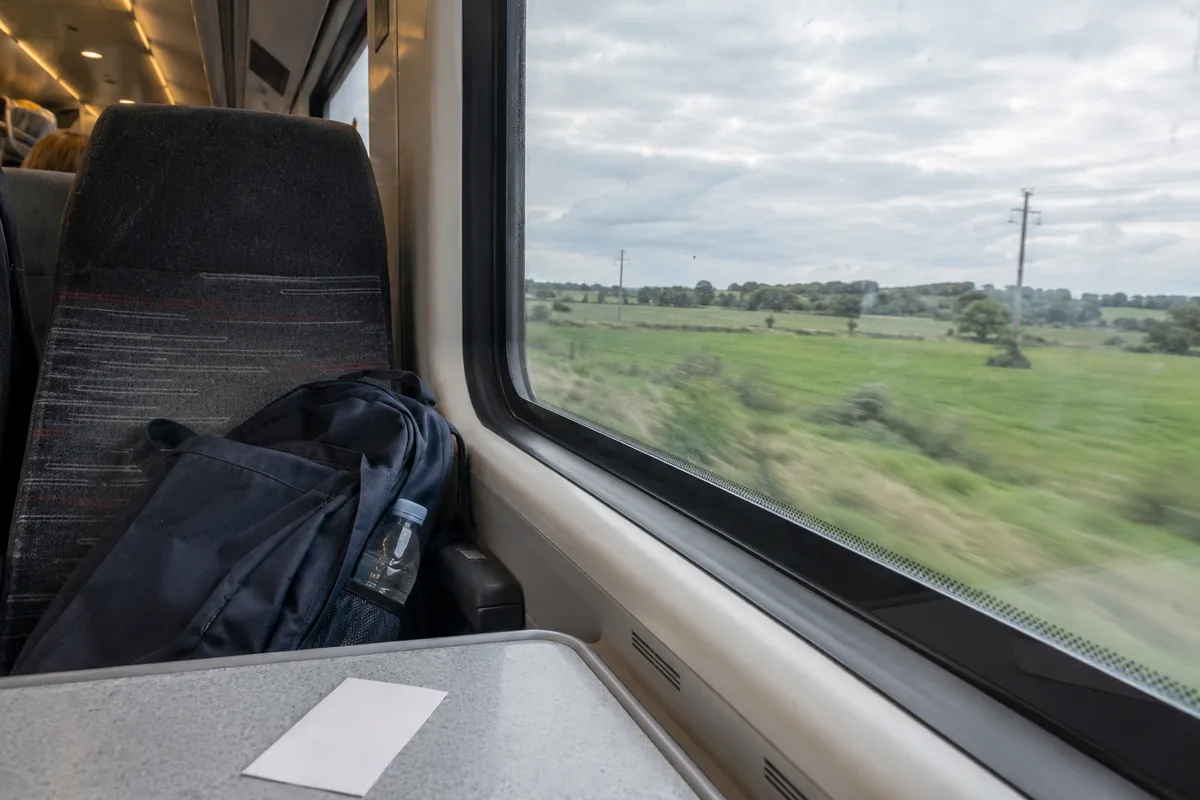
Plan a car-free nature trip from the return journey backward. Choose a base with a usable public-transport link, identify the actual entrance to the walk, then establish how you will get back. A train reaching a town does not establish that its nearby landscape is reachable on foot.
Start with one nature day you particularly want. You can add other outings after that first chain works. This keeps you from choosing a room around a scenic photograph and discovering that the useful bus leaves from somewhere else.
Choose the return anchor before the outward service
Record the final service you intend to use, its departure stop and the date it operates. Look for a second practical return rather than treating the last departure as your normal target. A timetable from a different weekday or season is a question to resolve.
The return anchor is more useful than a vague instruction to “leave plenty of time.” It tells you which decisions depend on a fixed departure. If the walking duration is still unknown, the available walking window does not prove that the route fits.
Ask the operator about reservations, boarding arrangements and changes to service. Do not assume a ticket guarantees a seat on every connecting vehicle. Keep the operator's current information beside the plan.
Check the link between station and walking route
Name both ends of the link: the station exit or bus stop, and the recognized entrance to the walk. Check whether you need another bus, a permitted pedestrian approach or an arranged transfer. “Near the station” leaves these unresolved.
In Great Britain, National Rail's station pages provide station-specific facilities, accessibility information and transport links where available. They are a starting point for checking the station, not evidence that a particular nature route or onward bus is usable.
The return sets the walking window
- Base
- Station
- Trail entrance
- Walk
- Walk finishes
- Return stop
- Confirmed return service
- Base
The diagram separates the transport stops from the walking entrance. Every connecting arrow needs an answer. A path shown on a map does not by itself establish permission, condition or an appropriate pedestrian crossing.
For the walking section, use the same questions as any other hike difficulty assessment: distance, climbing, terrain and conditions. Reaching the start without a car does not change those demands.
Compare bases by their repeated connections
Imagine two possible bases for the same holiday. These are invented planning options, not descriptions of a real destination.
| Question | Station-town room | Village room beside one walk |
|---|---|---|
| Arrival with luggage | One station-to-room link to investigate | Main journey plus the village connection |
| Main nature day | Outward and return services required | Walking entrance may be closer; verify it |
| Alternative day | Different services may provide options | Depends on what is reachable from the village |
| Evening return | Check the stop-to-room approach | Check the last village connection |
| Departure | Room-to-station chain | Reverse the village link before the main journey |
Neither column wins automatically. A village can be a useful base when it serves the walking you actually want. A station town can work when its outward links are practical. The decisive detail is the chain you will repeat, not the number of transport symbols on the map.
Give the walking window real boundaries
Write the earliest confirmed arrival at the walking entrance and the time you need to reach the return stop. Between them, account for the complete walk, breaks and the approach back to transport. Keep those components separate until their conditions are comparable.
Do not fill a missing walking estimate with the difference between two bus times. That difference is the available window; it is not a route duration. If you cannot establish that the outing fits, investigate a different route or base.
The National Park Service's preparation resource directs hikers toward advance planning and route preparation. Our transport chain adds the specific dependencies of a car-free day; it is not a park access approval.
Make a missed-link alternative that exists
A fallback might be another operating service, a confirmed transfer or a different local day chosen before departure. “Get a taxi” is incomplete until you know whether that service is available where and when you need it.
Write down the actual contact or stop information while connected. Keep a readable copy of the return details outside a journey-planning app. Offline information can preserve an instruction, but it cannot announce a cancellation that happened after you saved it.
If you plan to start and finish at different places, the point-to-point logistics guide helps trace people and bags. In this case, replace vehicle retrieval with the precise transport connections at both ends.
Leave luggage out of the walking experiment
Confirm where the main bag stays and when you can collect it. A room booking does not establish storage before check-in or after checkout. Avoid making your first nature outing depend on an unanswered storage request.
The distinction between a daypack and the main travel bag is useful even when every transfer is by public transport. What stays at the room and what travels with you should be settled before boarding.
Your finished plan can be short: a named base, one complete outward chain, one complete return chain, a checked walking option and a genuine alternative. Keep unresolved details visible. A smaller plan with working links is more useful than several appealing places connected by guesses.
What this guide is based on
This guide is researched editorial guidance. A source review does not confirm current local access, road conditions or your individual ability.
- Staying Safe — Trails & Hiking ↗U.S. National Park Service · B30-01
General US national-park preparation resource; does not establish access, walking times or suitability of a proposed route.
- Find a Station ↗National Rail · B30-02
Great Britain station information only; facility listing does not confirm a particular train, onward bus or currently functioning lift.