Train, Bus or Rental Car: Compare the Whole Journey
An identical-endpoint matrix and a fully labeled synthetic door-to-door time calculation.
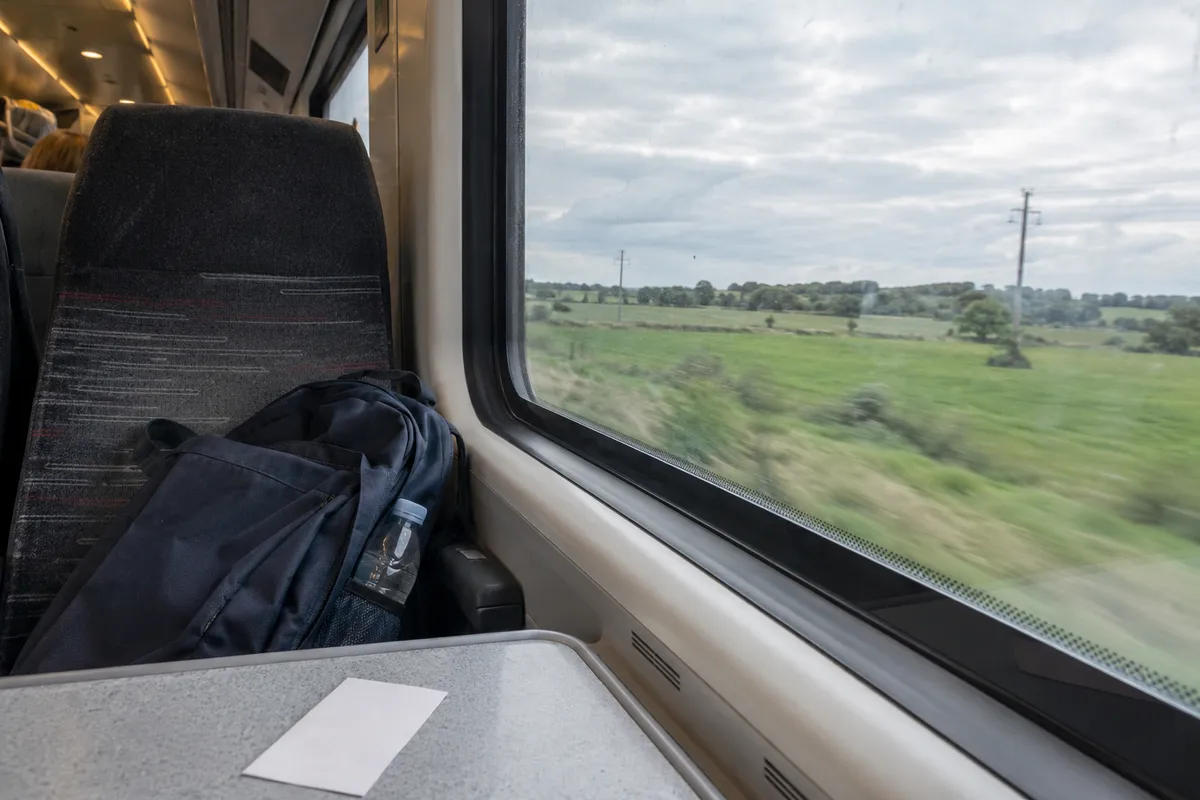
Compare train, bus and rental car between the same actual endpoints, including the links before and after the main ride. Then check the return and the conditions that make each option usable. The shortest headline journey time does not necessarily produce the simplest day.
This method is for choosing a transport chain between a city base and a nature outing. It does not decide which mode is always cheaper, faster or better, and it supplies no real fares or service schedules.
Freeze the outing before comparing transport
Name the room entrance, the destination entrance and the travel date. Use the same intended activity and group in every column. Otherwise you can accidentally compare a train to a town with a car to the walking entrance.
Set the return endpoint too. If the day finishes somewhere else, say so before estimating. A mode that works outward may create a different problem after the walk.
Use route shapes to establish whether you are returning to the same place. Do not change the walking route silently to make one transport option look better.
Count the links that differ
For public transport, investigate reaching the stop, waiting or boarding, the main service and the approach from the arrival stop. A connection adds its own transfer questions. For a car, investigate collection, driving, parking and the final approach on foot.
In Great Britain, National Rail station information can help check the station, its facilities and transport links. It does not establish your full door-to-nature journey or a bus connection elsewhere.
Keep each estimate attached to its conditions. An uninterrupted driving estimate and a scheduled train duration do not answer exactly the same question. Add the missing components before deciding what their difference means.
Read a synthetic door-to-door comparison
The following values are invented solely to demonstrate the method. They are not typical durations, operator estimates or timings for a real place. Each row covers one outward journey from the same hypothetical accommodation to the same hypothetical outing entrance.
| Mode | First component | Second component | Third component | Final component | Illustrative total |
|---|---|---|---|---|---|
| Train | Reach station: 15 min | Wait / board: 10 min | Train: 55 min | Approach: 20 min | 100 min |
| Bus | Reach stop: 15 min | Wait / board: 15 min | Bus: 65 min | Approach: 10 min | 105 min |
| Car | Reach collection / handover: 20 min | Drive: 45 min | Park: 15 min | Approach: 10 min | 90 min |
Compare the whole connection
Here the car's invented moving time is 45 minutes, but the invented full outward chain is 90 minutes. Comparing 45 directly with the train's 100 would mix two different measures.
These totals are valid arithmetic because every component in the exercise is supplied and sequential. For a real journey, do not replace a missing parking, handover or transfer duration with zero. Keep the total unresolved until the relevant pieces can be compared.
Recalculate for the actual car arrangement
If the car is already collected and available at the accommodation, the first component changes. If collection requires a detour, that belongs in the chain instead. Do not force your real situation into the example's numbers.
For a one-day rental, the return-to-provider arrangement is a separate dependency. Ask when, where and under what conditions you must hand the vehicle back. A pleasant walk should not hide an unresolved return deadline.
The mountain car-rental question sheet addresses route permission, vehicle and agreement questions. A car option is not usable simply because a map displays a road to the destination.
Keep walking access from parking in the comparison too. Driving closer on a map does not establish that parking is available at the place you intend to stop.
Compare constraints alongside duration
Use a second pass for the questions a time total cannot answer.
| Question | Train or bus | Rental car |
|---|---|---|
| What fixes departure? | Actual service, ticket and boarding conditions | Collection and return arrangements |
| Where are the main bags? | Accommodation or agreed storage; otherwise carried | Accommodation or another agreed arrangement |
| What happens if the outing ends differently? | Another workable service or transfer is needed | People and vehicle must be reunited |
| Who handles the transport decisions? | Travelers still manage connections and ticket conditions | The approved driver also handles the road and vehicle agreement |
| What remains unknown? | Record it explicitly | Record it explicitly |
These are questions, not claims that one mode offers guaranteed flexibility. Ask the relevant provider about current conditions rather than inferring them from a label.
The trip-format comparison is useful if the real choice is whether you drive, hire a driver or follow a group program. That is a different comparison from the mode choice here.
Give the return its own row
Do not double the outward total automatically. A different service pattern, collection point or vehicle return can change the other direction. Check the last useful connection and the effect of missing your intended one.
If the walk ends at a different entrance, trace people, vehicle and bags using the point-to-point logistics guide. A complete return plan may change which outward option you prefer.
Choose the chain you can explain from door to destination and back, with its commitments and unknowns visible. Save the comparison in your trip worksheet and replace the synthetic numbers only with estimates that belong to your actual dates and endpoints.
What this guide is based on
This guide is researched editorial guidance. A source review does not confirm current local access, road conditions or your individual ability.
- Find a Station ↗National Rail · B30-02
Great Britain station information only; facility listing does not confirm a particular train, onward bus or currently functioning lift.