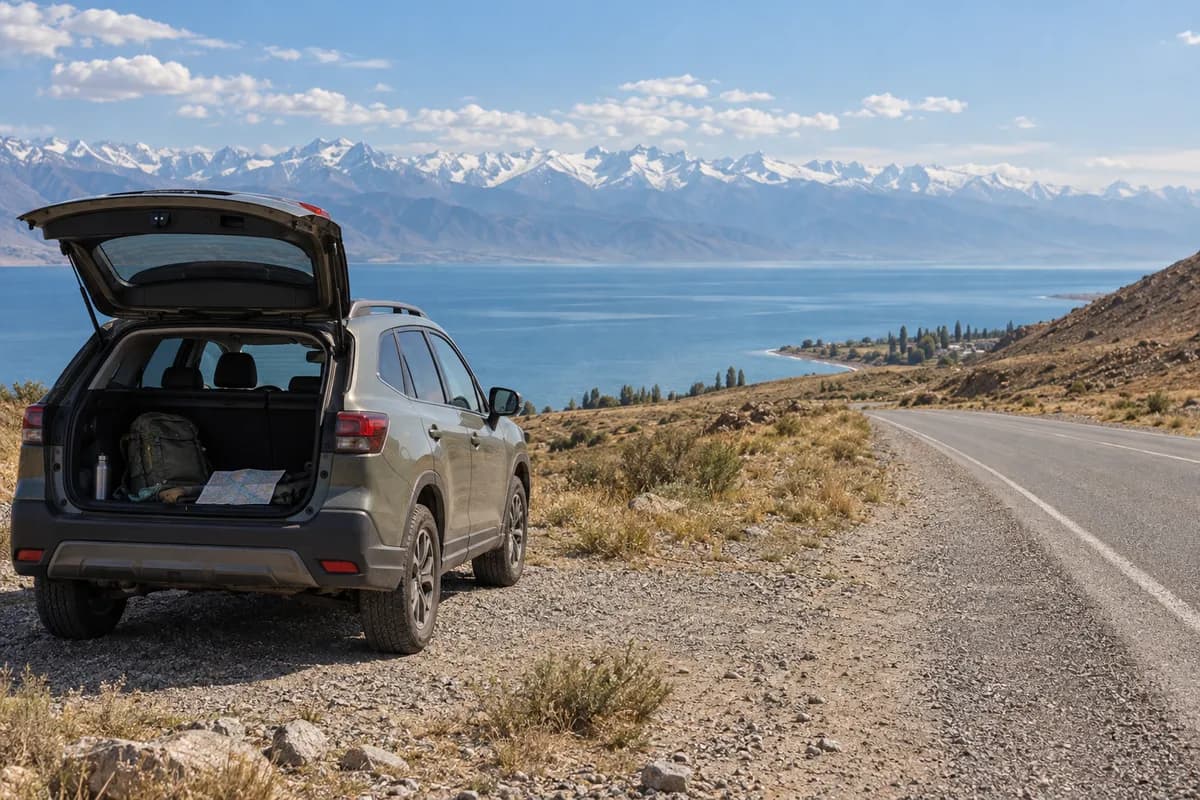
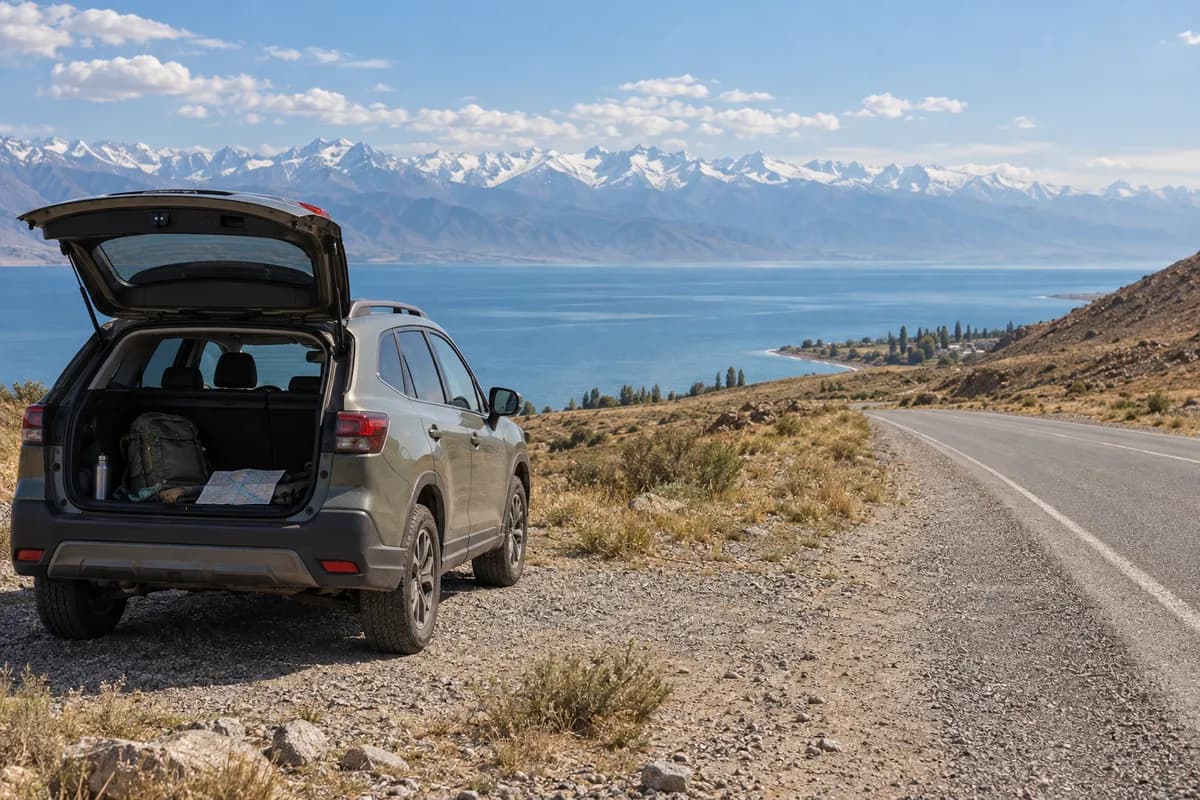
Planning a Point-to-Point Hike During a Road Trip
Resolve the car, finish pickup, main luggage and missed-connection plan before walking between trailheads.
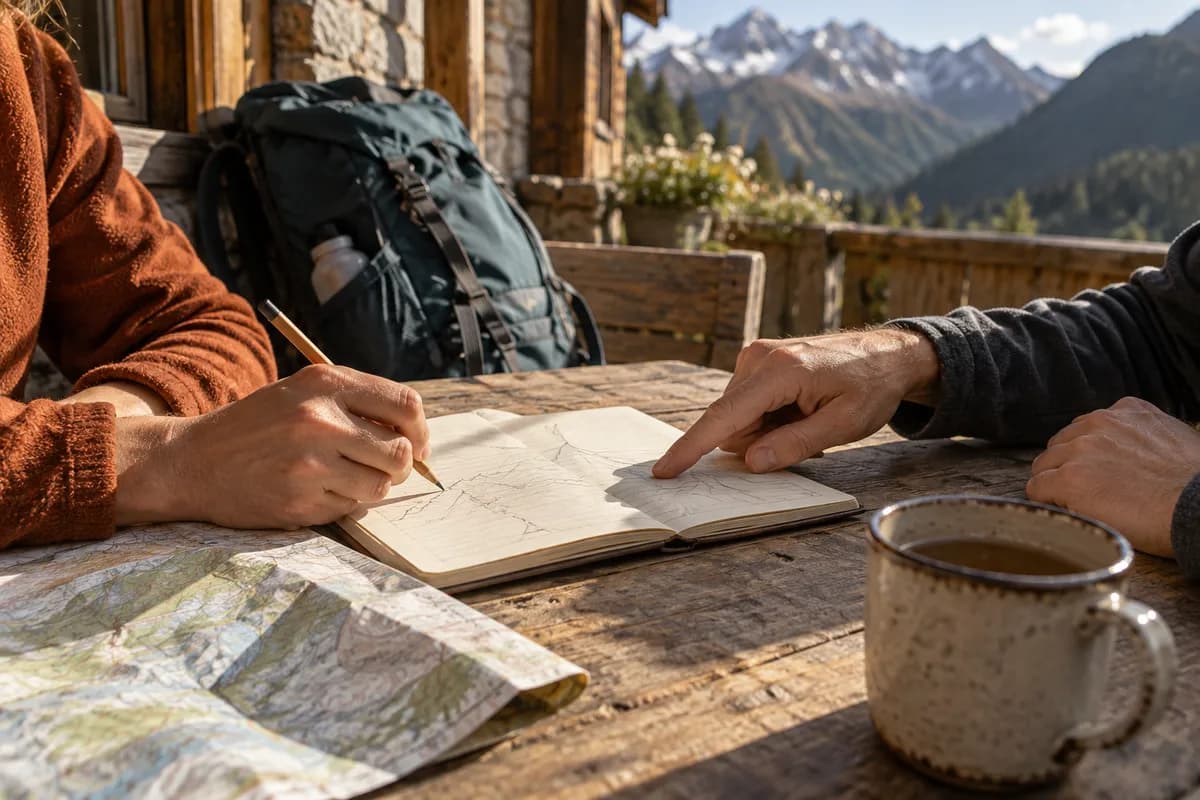
Solve the finish before starting a point-to-point hike. You need a way for people, vehicle and main luggage to end up where the next part of the trip begins. Walking between two places does not establish a drivable connection between them.
This guide assumes a day walk with a different finish. It addresses transport and handovers; route shapes explains the geometry.
 Schematic route shapes, not a navigation map. Start ● · Different finish ■. A point-to-point plan needs a separate answer to “How do we return?”
Choose a vehicle arrangement
| Arrangement | Car location during the walk | Main advantage | Detail that must be confirmed |
|---|---|---|---|
| Transfer to the start, walk back to the car | At finish | Vehicle is already available afterward | Morning transfer, permitted parking and final approach |
| Park at the start, transfer after walking | At start | Simple departure from the car | Reliable finish pickup and vehicle retrieval |
| Driver moves the vehicle | Travels to finish | Bags can move without a second car | Road access, driver duties and arrival arrangement |
| Two vehicles | One at each end | Independent finish access | Both parking sites, drivers and retrieval of the first car |
These are planning designs, not locally available services. A transport directory such as Destination Karakol's can help identify who to ask, but it does not confirm your exact pickup.
Pin the actual meeting point
Use a precise place that both walkers and driver can reach by their respective routes. “The valley” or “near the lake” is not enough. Confirm whether the walking finish is also a vehicle-access point, and whether permission or an approach walk is needed.
Send the agreed location through a usable method and check that it can be opened offline where necessary. An image of a pin is not proof that a road reaches it.
Keep movement and waiting separate
The driver's road time, walking duration and potential waiting are different quantities. Ask who will wait, where and under what agreement. If the route duration is unknown, do not create a precise pickup promise from it.
Agree how changes are communicated and what happens without a connection. “Call when we arrive” is incomplete if phone coverage has not been established.
Trace luggage and keys
In an original handover exercise, write the location of four things at departure and finish: walkers, main bags, car and keys. Any row without an owner exposes a gap.
Carry the day's required equipment rather than leaving it in a vehicle that may be far away. Confirm who may move the car under the rental agreement. A companion holding the keys is not automatically an authorized driver.
If the planned night changes, check whether luggage can reach the new accommodation. Do not assume a driver service includes every room transfer.
Keep a fallback that reunites the group
Before walking, decide whether an out-and-back is feasible from the original start if finish access is unresolved. It needs its own verified walking distance and turnaround plan.
If a transfer fails after the walk, use the agreed procedure; do not depend on spontaneous roadside help as the whole plan. Keep relevant service and accommodation details accessible.
The result should be a handover note someone else could follow. Use the worksheet to retain it alongside your trip-format choice.
What this guide is based on
This guide is researched editorial guidance. A source review does not confirm current local access, road conditions or your individual ability.
- Transportation to Karakol ↗Destination Karakol · S09
Transport options, not current timetable, fare, road condition or door-to-door duration.
- Staying Safe: Trails & Hiking ↗U.S. National Park Service · S16
General preparation resources; not a guarantee that a particular hike is suitable.