Planning Photo Stops Without Rushing the Day
Agree a main photo stop, account for its full time and protect the shared outing, return and other visitors.
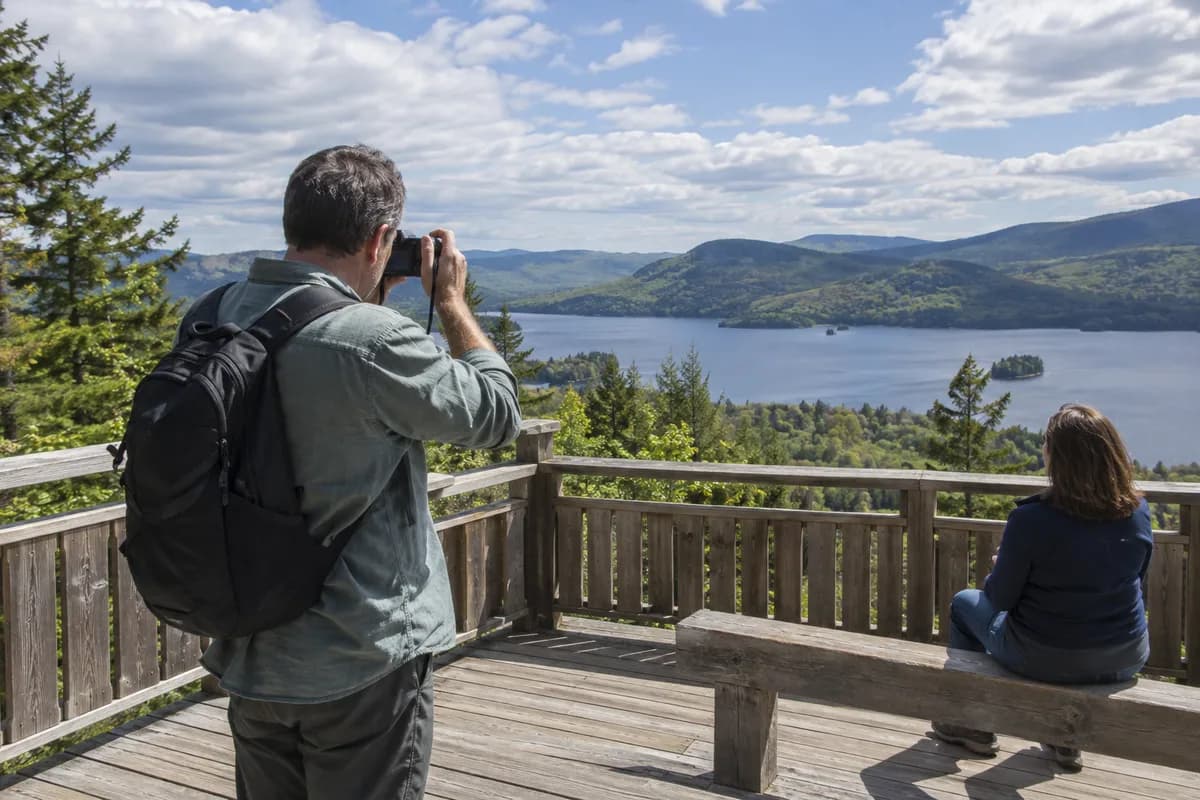
A photo stop belongs in the travel-day plan, including the time to reach it, wait, look and rejoin the outing. Agree which stop matters most and which images can remain opportunities rather than commitments. That makes room for photography without requiring everyone else to rush the journey.
This is a planning guide, not advice about cameras, exposure settings or a place's photography laws. Check the relevant site's access and photography rules before choosing the location. A promising image does not establish permission to stand there or time to stay.
Decide whether photography is the main outing
There is a difference between a shared walk with photographs and a deliberate photography session with some walking. Discuss it before choosing the route. If one person expects to wait for a specific light or scene while another expects to keep moving, the disagreement is about the purpose of the day.
Name one main photographic interest in plain language: a chosen viewpoint, a building detail or time to observe a scene. Then identify what the other people want from the same outing. You do not need matching interests, but you do need an arrangement everyone understands.
For a longer holiday, put a photography-focused outing on a date that can support it instead of making every shared excursion serve two incompatible purposes. The city-and-nature week offers a synthetic calendar for separating priorities.
Budget the stop as more than the shutter press
Include the approach, any permitted detour, the time you intend to spend and the return to the shared route. If the plan depends on a queue, a reservation or a particular access point, establish that separately. “Only five minutes for a photo” is not a useful description when it excludes the journey to the location.
Use a deliberately invented three-hour outing to see the arithmetic. There is no real destination or recommended duration behind these numbers.
| Part of the synthetic outing | Allocated time |
|---|---|
| Movement along the selected outing | 90 minutes |
| One main photo stop, including its agreed approach and return | 30 minutes |
| A planned pause | 20 minutes |
| Time left unallocated | 40 minutes |
| Total | 180 minutes, or three hours |
Photo time belongs inside the day
- Movement90 min
- Photo stop30 min
- Pause20 min
- Unallocated time40 min
The diagram is a partition of hypothetical time, not a walking-speed model or a guarantee that delays fit. The calculation is 90 + 30 + 20 + 40 = 180. Do not copy the proportions into a real route without understanding its demands.
Change the proposal when an assumption changes
Suppose the same fictional outing's movement estimate becomes 120 minutes after the route is clarified. Only 60 minutes remain within the three-hour window. The original photo stop, pause and unallocated time total 90 minutes, so they no longer fit.
Do not solve that discrepancy by assuming everyone can move faster. Reconsider the route, the photographic objective or the available window. Keep necessary preparation and people's needs in the plan. Unallocated time is not a pile of guaranteed spare minutes that can always be spent on another viewpoint.
Where the return is fixed, the turnaround-time example shows why a late start does not automatically move every deadline later. Removing an optional photographic objective may be the change that preserves the rest of the day.
Agree what happens when someone wants to continue
Decide how the group will communicate the end of a stop. An agreed clock limit or a clear cue can be useful, provided it fits the actual outing. Make the optional part explicit before people are invested in the scene.
If you want to spend separate time, plan the meeting and return appropriately rather than improvising a split on an unfamiliar route. Not every place or activity supports a separate arrangement. One person continuing independently is a different proposal, with different responsibilities.
Use mixed-pace planning to discuss preferences without assigning every compromise to the same traveler. A person who is not making photographs still has a purpose for the day; waiting should be an agreed part of it.
Share the space rather than staging it
The Leave No Trace guidance on other visitors emphasizes consideration, shared access and avoiding unnecessary noise. For a photographic stop, keep the established way usable, avoid monopolizing a narrow viewing place and follow the site's instructions.
Ask before making a person the main subject of your image, and accept a refusal. This is our courtesy recommendation, not a statement of local photography law. Do not turn someone's work, private space or quiet visit into a prop because it suits the frame.
For wildlife, Leave No Trace advises observing from a distance, not following or approaching, and not feeding animals. Check the site's specific rules as well. This guide provides no universal distance, and the wish for a closer image does not justify changing the animal's behavior.
Keep one useful photographic agreement
Write down the main stop, the agreed scope of time, the return constraint and what can be omitted. Keep unexpected image opportunities optional unless the whole plan is reconsidered. You can notice a scene without making it another scheduled destination.
Add the agreement to your trip worksheet and save it on this device or export/print the current version if you want a separate copy. A satisfying shared day does not require collecting every possible image. It requires a plan in which photographs, movement and other people's reasons for being there can coexist.
What this guide is based on
This guide is researched editorial guidance. A source review does not confirm current local access, road conditions or your individual ability.
- Principle 6: Respect Wildlife ↗Leave No Trace · C30-13
General outdoor ethics; local wildlife distances, access restrictions and rules must be checked.
- Principle 7: Be Considerate of Others ↗Leave No Trace · C30-14
General shared-space ethics; no legal permission for photography or universal trail rules.