Planning Your First Solo Day Hike
Separate familiar walking skills, independent decisions and a usable contact plan before choosing a first solo outing.
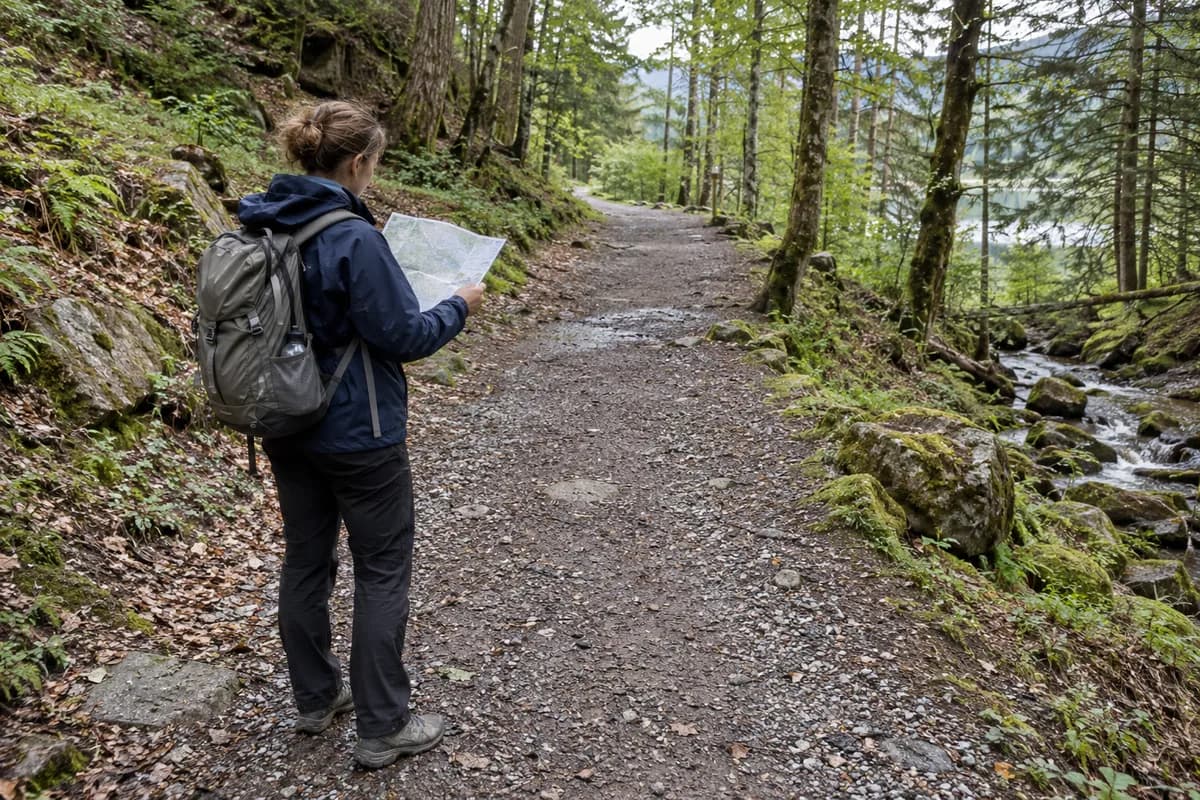
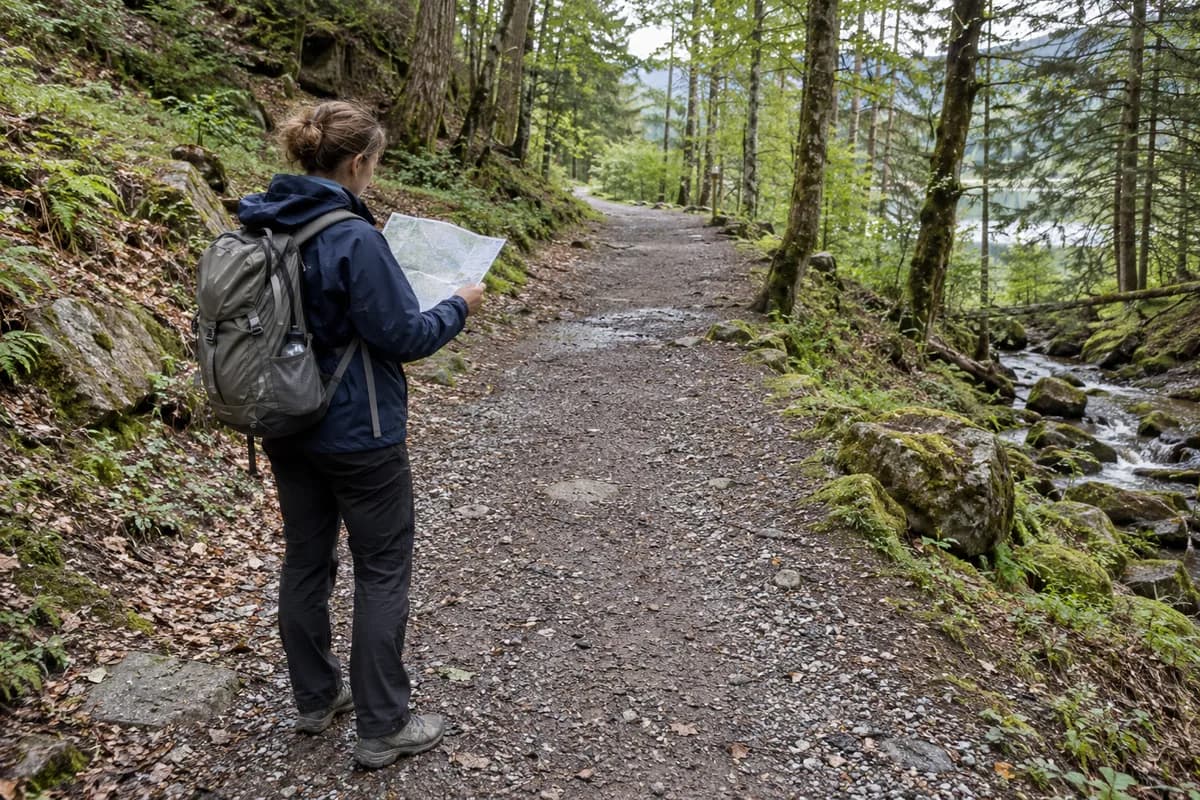
A first solo day hike should be a decision about responsibilities, not a test of how far you can go alone. Start by identifying which parts of the proposed walk you already understand and which would become new tasks without a companion. If several important parts are unfamiliar, change the plan before adding equipment to it.
This page does not determine whether a particular route is suitable for you. The National Park Service's Hike Smart guidance asks readers to consider experience, environment and whether they are walking alone; it also favors a companion. Local advice can be more restrictive. Read the guidance for the actual place rather than treating a general article as permission.
Keep the walking familiar while the responsibility changes
There is a difference between repeating a walk independently and combining a first solo outing with an unfamiliar route, terrain and transport arrangement. Write down what changes from your recent experience. Include the journey to the start, finding junctions, deciding when to return and getting home afterward.
A route you walked with a confident friend may not yet be familiar in the relevant sense. Did you make navigation decisions, notice the turning points and check the return connection, or simply follow? Reconstruct the day from the description and map. Gaps are information about what to practice, not a judgment of your confidence.
Use the trail-description checklist to identify the exact start, finish and route version. Choosing a smaller or more familiar outing is a concrete planning result. So is deciding to go with someone else.
Three questions before choosing the outing
Three questions before walking alone
- Known walk
- Independent tasks
- Contact plan
- Choose a smaller plan
- Consider a companion or guided option
The diagram is an original decision schematic. It does not grade routes or predict an outcome. Consider these three questions separately:
- Can I describe the walk? Identify its complete return, relevant terrain and the current information you still need.
- Can I handle the independent tasks? Think about your actual skills, equipment use, navigation and decisions, rather than the presence of an item in a backpack.
- Can I communicate a usable plan? Decide who has the details and what arrangement you have made about checking in.
An unanswered question should change the proposal. For example, uncertainty about a return bus is a reason to establish a different return arrangement, not to assume that an earlier walking start solves everything. Equipment and communication are not substitutes for skills or appropriate local advice.
Build a contact brief someone can actually use
The NPS Trip Plan provides a written-plan model for a trusted contact who is not joining the outing. It explicitly does not guarantee safety or rescue. Use the local authority's current guidance when deciding the contents and escalation arrangements for your own plan.
For your draft, make the information specific enough that another person does not have to guess which walk you meant. Record the route version, start and intended finish, relevant transport details, expected return and the way you will check in. Include the alternative you have actually discussed. A list of several possible trails with no chosen version leaves the central question unresolved.
Confirm that the contact received the information and understands the arrangement. Think through how you will communicate a permitted change and how you will close the check-in when back. Do not assign someone an unspoken responsibility because they happen to know you are on vacation. Keep personal details with the intended contact rather than posting your real-time location publicly.
Compare three hypothetical proposals
These are invented planning cases, not recommended routes or assessments of individuals.
| Proposal | What changes | Planning response |
|---|---|---|
| Repeat a recently understood walk | You handle decisions previously shared | Review whether you truly know the route and local advice |
| Try a new trail from a familiar base | Route knowledge and independent decisions change together | Resolve the route details or choose a more familiar outing |
| Combine a new trail, unfamiliar terrain and uncertain transport | Several dependencies remain open | Reduce the plan or arrange appropriate support |
The table does not award approval to the first proposal. A familiar path can still have changed conditions. Its purpose is to prevent the word “solo” from hiding several different decisions inside one exciting idea.
Prepare the smaller version before leaving
Describe an alternative that uses confirmed information and stays within the boundaries you have set. It could mean choosing a different established walk, going with a companion or using an appropriate guided activity. A vague promise to find something easier on arrival is not yet an alternative.
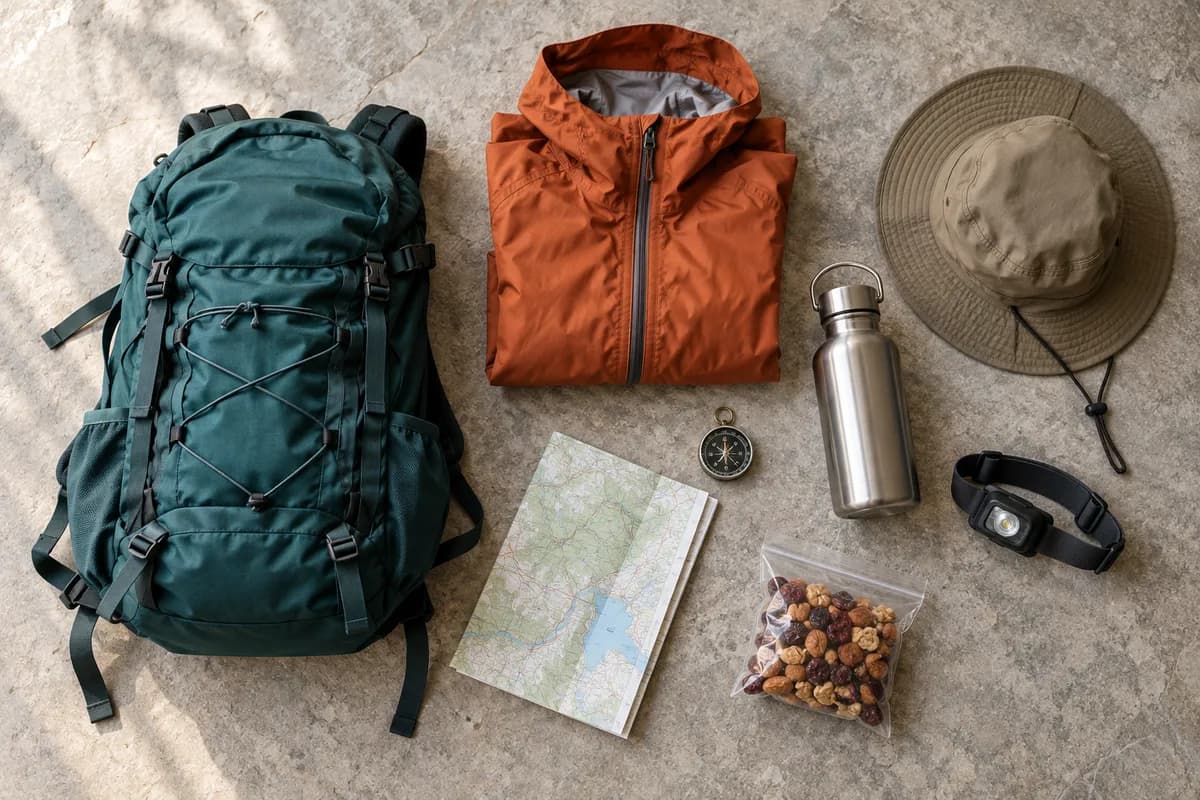
For a guided option, read questions to ask a day-hike provider. For the selected outing, adapt the day-hike packing checklist to the actual place and requirements. Do not use the checklist as a certificate that a route now fits.
When the plan remains difficult to explain, pause the commitment. The useful outcome is a day whose responsibilities you understand, including the choice to change or postpone it. You do not need to complete a first solo hike on a particular trip simply because that was the original idea.
What this guide is based on
This guide is researched editorial guidance. A source review does not confirm current local access, road conditions or your individual ability.
- Hike Smart ↗U.S. National Park Service · C30-01
General US-park preparation advice; no solo fitness or route suitability assessment.
- Trip Plan ↗U.S. National Park Service · C30-02
Written trusted-contact plan does not guarantee safety or rescue and does not replace permits.