Questions to Ask Before Booking a Guided Day Hike
Match the named leader, relevant experience and scope, day plan and changed-plan agreement to the hike you actually want.
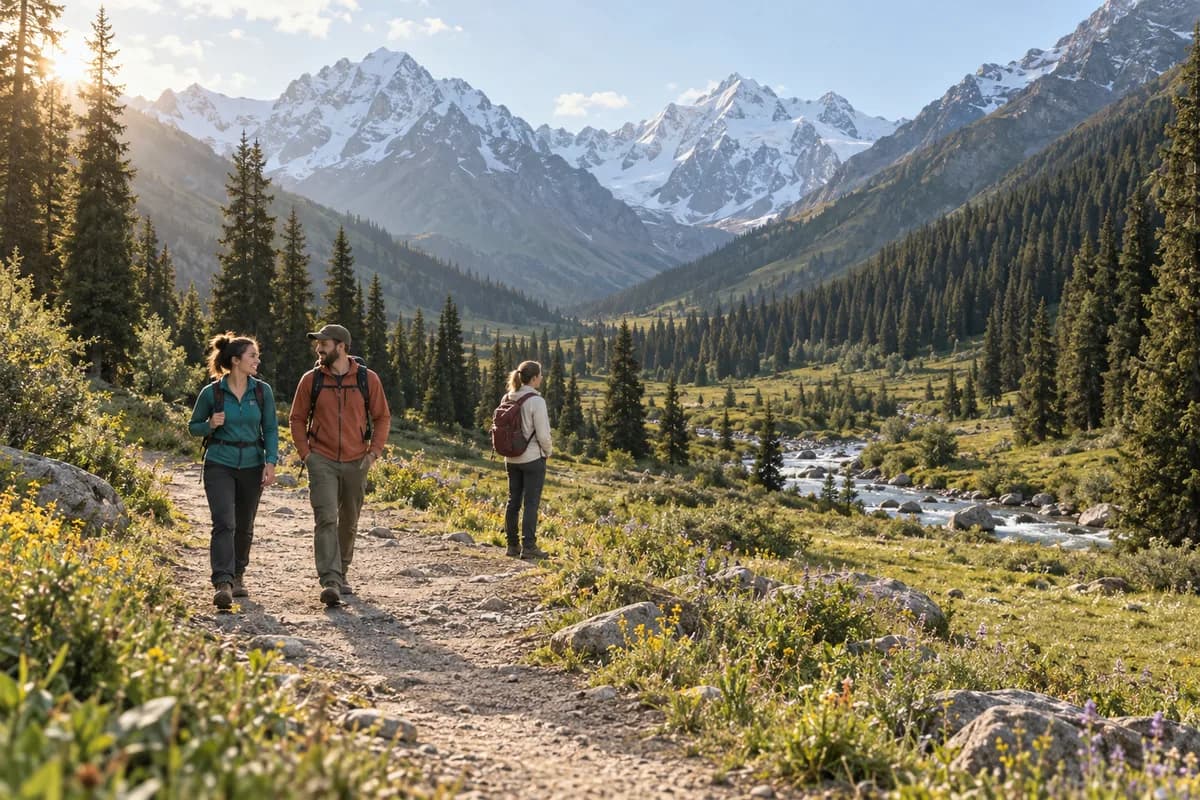
Choose a guided day hike by matching the actual day and leader to your needs, then checking how the arrangement works when plans change. A friendly description, good photograph or qualification name is only part of the information. Ask for a specific proposal before comparing providers.
This guide offers questions, not a certification of any company or a statement of worldwide licensing rules. Requirements and professional schemes vary by place and activity. A provider's answers should be checked against the relevant local authority or awarding organization where appropriate.
Begin with a briefing about the day you want
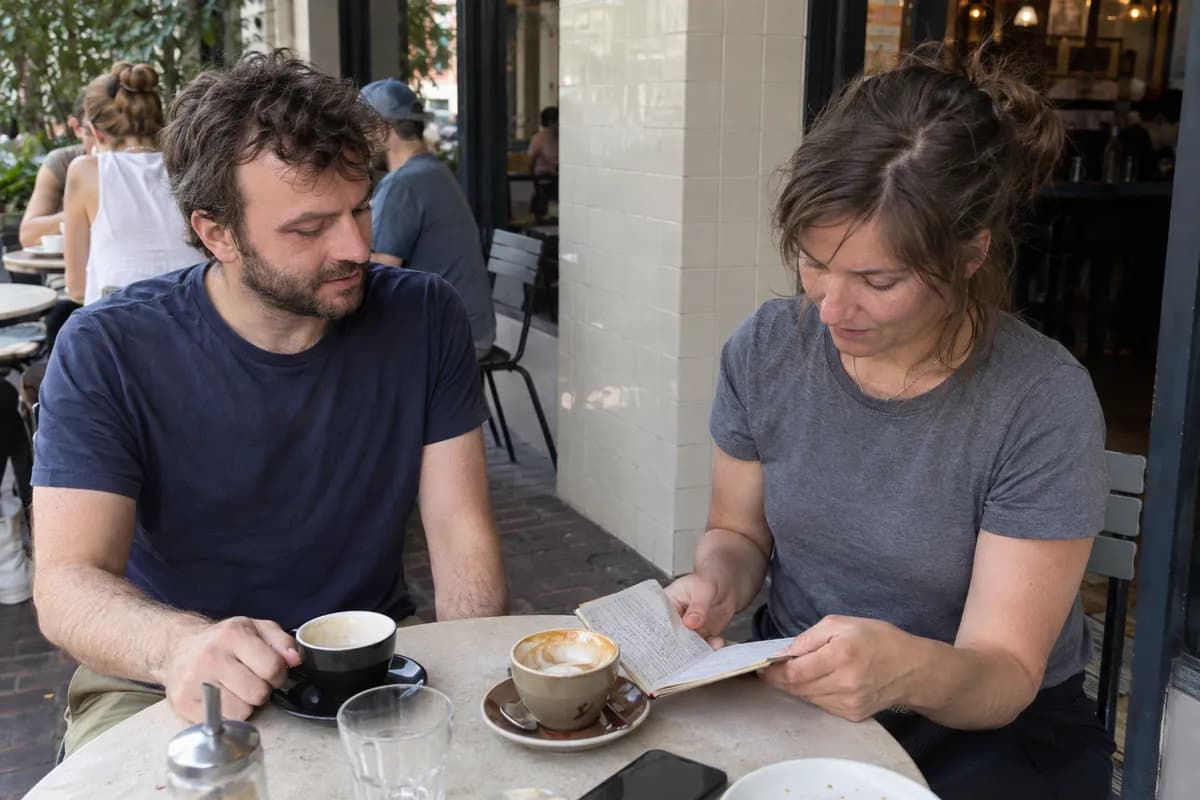
Describe your recent walking experience in concrete terms. Include the surfaces and climbing you have experienced, what you found demanding and what you want from the proposed day. Tell the provider about relevant requirements you want them to consider; do not expect a single difficulty label to communicate everything.
State whether your main interest is walking, learning, scenery, photography or spending time with companions. Explain any firm start or return constraint. A guide can respond more usefully to “we need to be back at our base for a confirmed arrangement” than to “we want a relaxed day.”
For a party with different preferences, make them visible before asking for a route. The mixed-pace planning guide helps you frame that conversation without treating one person's preferred pace as the group's default.
Ask who will actually lead
Find out whether the person answering your inquiry is the person who will lead the walk. Ask what happens if the named leader changes and whether you will receive an updated briefing. A company biography does not identify the leader allocated to a particular date.
Useful questions include the leader's relevant experience of the proposed activity and place, the language used for instructions, how the group is organized and who handles transport. Ask which responsibilities belong to the leader and which remain yours. Keep the answer attached to the exact outing, not only the company name.
Do not translate a confident claim such as “our guides know everything” into a practical answer. Ask what experience and preparation relate to your intended terrain, season and group.
Check the scope of a qualification, not only its title
Mountain Training's qualification comparison describes different scopes for walking qualifications. This illustrates why terrain, activity and conditions matter when interpreting a credential. It is a particular qualification framework, not a universal legal test.
Match the leader to this day
- Terrain and season
- Named leader
- Relevant scope
- Written day plan
The original diagram links your proposed activity to the evidence you need. It does not rank qualifications or approve a provider.
When a qualification is relevant, ask for its precise name, the awarding organization and how the current holder's status can be checked. Ask how its scope relates to the proposed day. A summer walking credential should not be expanded in your imagination into every season, terrain or technical activity.
Where a provider describes a different way of demonstrating competence, ask for that explanation clearly. Verify applicable requirements locally rather than assuming that one country's system controls another country's outing.
Compare replies to the same inquiry
Consider two invented replies to one hypothetical request. Neither represents a real operator.
| Reply | What it establishes | What remains to ask |
|---|---|---|
| “Our expert guides will choose a beautiful walk” | The provider is offering route selection | Named leader, terrain, anticipated demands and return arrangement |
| “This is the proposed route version; here is the leader and the alternative if it does not fit” | More of the intended arrangement is explicit | Unanswered requirements, current access and the precise terms |
The second reply is more detailed; it is not automatically a better or safer service. Check whether the explanation answers your actual needs and is supported where verification is possible. Written detail can still contain an assumption.
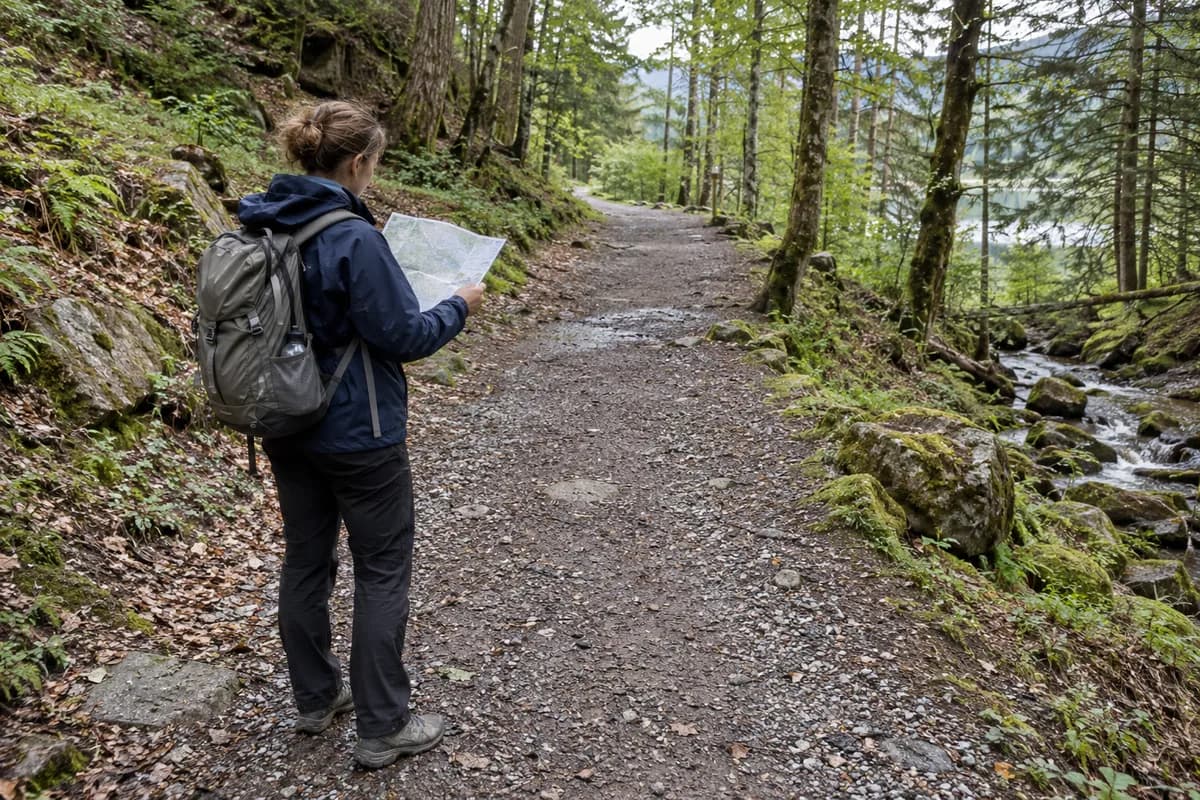
Use reading a trail description to examine the proposed walk independently. Ask whether the duration is walking time, total activity time or a door-to-door estimate. Include transfers and any meeting arrangements in the comparison.
Agree how a changed day will be handled
Ask who decides when the proposed route is changed, how the group is consulted and what alternatives are available. If a participant cannot continue with the intended activity, ask how the provider plans to handle that situation. Do not invent an informal split-group arrangement after arrival.
Clarify the terms for changed conditions, cancellation, transport, meals, equipment and anything described as optional. Ask for the current written terms rather than relying on a brief message. This is a request for information, not an interpretation of your legal rights.
Also establish what you must bring and what is actually supplied. “Equipment included” needs a list, sizes or fitting arrangements where relevant, and an explanation of exclusions. Avoid assuming that a guide will carry your personal necessities.
Send a short, answerable final inquiry
An original inquiry template could read:
“We are considering this date and route. Our recent walking experience is described below, and our main requirements are listed. Who would lead, what is the proposed route version, and how would the day change if it no longer fits? Please confirm the meeting, return, inclusions and current terms.”
Keep the reply with your plan, then resolve the important gaps before committing. For a complete multiday offer, use the small-group tour comparison instead. For a single day, the useful outcome is a shared understanding of the proposed activity and responsibilities, not a collection of impressive titles.
What this guide is based on
This guide is researched editorial guidance. A source review does not confirm current local access, road conditions or your individual ability.
- Which Mountain Training qualification is right for me? ↗Mountain Training · C30-06
Scheme-specific terrain/season scopes; does not establish worldwide licensing rules or vet a provider.