Hut-to-Hut Walking or Day Hikes from One Base?
Compare overnight dependencies, carried items and alternatives before choosing connected huts or a fixed walking base.
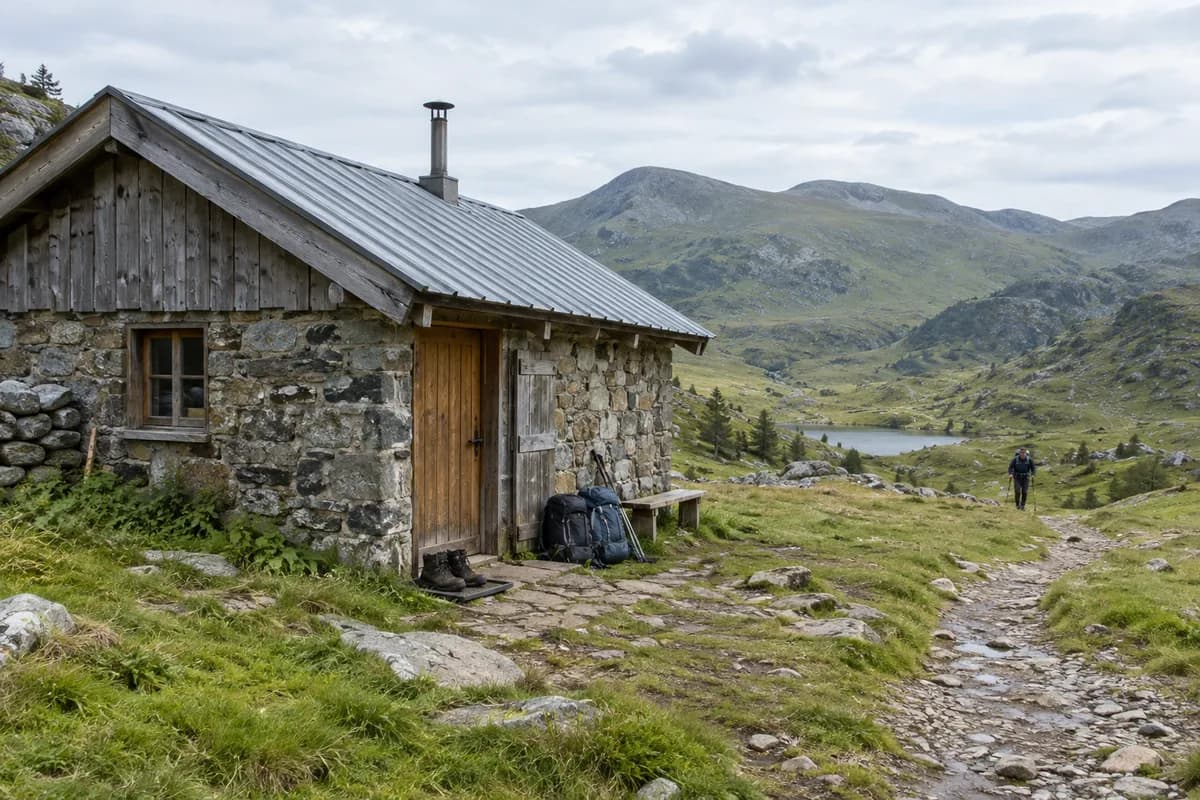
Choose hut-to-hut walking when moving on foot between overnight places is part of the experience you want. Choose day hikes from a base when returning to the same room and changing individual walking days matters more. Compare the obligations created by the overnight plan before comparing photographs of the scenery.
Neither choice automatically means an easier walk, a lighter pack or a more comfortable night. The exact routes, accommodation and arrangements decide those questions. This comparison concerns the structure of your walking holiday, not the definition of trekking.
Where must you be tonight?
A fixed base separates most overnight decisions from the choice of that day's walk. You still need a way back, and a remote base may involve demanding journeys to the starts. However, changing one outing does not necessarily require changing where your main luggage and room are located.
A connected hut plan ties the walking stages to successive overnight places. The question becomes not only whether you want the next section, but how the next confirmed night can be reached and what alternatives exist. A hut name on a map does not establish access, an available bed or the facilities you need.
The overnight changes the next day
- One base
- Day walk
- Same base
- Hut A
- Walking stage
- Hut B
This original schematic compares dependencies, not real terrain. The lines do not represent roads, distances or permitted shortcuts. For the broader accommodation choices, see hiking without camping.
Ask the same questions of both versions
| Planning question | Connected huts | Day hikes from a base |
|---|---|---|
| Overnight obligation | Reach the next confirmed overnight place or use a feasible alternative | Return to the base or enact a separately arranged change |
| Main luggage | Establish what travels with you and what happens to the remainder | Establish storage and what can stay in the room |
| Changed walking day | Check consequences for later nights and transport | Check the replacement outing and return journey |
| Comfort | Confirm facilities at every overnight place | Confirm the chosen room and services |
| Arrival and departure | Connect the first and last walking stages to transport | Connect the base and each selected start to transport |
The columns are planning prompts, not promises about every hut or hotel. You can have an inconvenient fixed base or a well-supported hut itinerary. Ask what the proposed arrangement actually provides.
A hut is an individual place, not a standard package
The New Zealand Department of Conservation's hut booking guidance distinguishes bookable huts from ones that cannot be reserved. That is a useful example of why the exact overnight place matters. It describes DOC's network, not a worldwide hut rule.
For every proposed night, record the accommodation's own current information: whether a reservation is required or possible, what your confirmation covers, check-in arrangements and the relevant facilities. Ask about food, cooking, water arrangements, bedding and any specific equipment instructions instead of inferring them from the word “hut.” Keep unclear items marked as questions.
Do the same with an overnight base. A hotel booking does not establish early breakfast, luggage storage or transport to a walking start. Compare confirmed arrangements rather than an imagined comfortable hotel against an imagined basic hut.
Test the middle day, not only the first night
Consider an invented three-night walking holiday. In version A, you stay at one base and choose outings separately. In version B, you plan nights at Hut A, Hut B and Hut C. These names are placeholders for the comparison, not recommendations.
Now imagine that you decide against the intended walk after the first night. In version A, ask whether there is a suitable alternative near the base and whether your transport arrangements can change. In version B, ask where you can actually stay next, how you can reach it and what happens to the later bookings.
If version B depends on a vehicle collection or an extra night, those arrangements need to exist before they can serve as the alternative. “There will probably be a road nearby” is not a transport plan. Equally, version A needs more than “we can do another hike” if there are no established options within reach.
This test reveals the kind of flexibility you value. It does not establish that either invented itinerary is feasible in a real place.
Write the carried-load arrangement in plain language
List the items needed during the walk, those required for the night and those you intend to leave elsewhere. Then identify who moves each set and where it will be available. If a luggage service is proposed, confirm its route, timing and exclusions with the provider; do not assume one exists.
The daypack and backpack comparison helps distinguish carried tasks from bag labels. Do not choose a small bag first and then remove needed items to make the itinerary fit it. Nor should a large bag be treated as evidence that the plan is suitably prepared.
Make the decision about the holiday you want
Finish with two short descriptions: “I want to walk between my overnight places” or “I want a reliable base with separately chosen outings.” Add the unresolved items beneath each. If the reason for choosing huts is only that they appear more adventurous, inspect the middle-day obligations again.
Use one base or a moving trip to compare the wider holiday structure. Before confirming either version, check every selected route and overnight place for your dates. A coherent chain on paper still needs current local information and arrangements.
What this guide is based on
This guide is researched editorial guidance. A source review does not confirm current local access, road conditions or your individual ability.
- Booking and paying for huts ↗New Zealand Department of Conservation · C30-03
DOC huts only; booking and payment arrangements differ by hut and may change.